

Spine conditions · Long Beach, CA
Spinal tumors in Long Beach, CA
A tumor in or near the spine is frightening news. Many are benign, and even cancerous tumors can often be treated in ways that relieve pain, protect the nerves and keep you walking.
Spinal tumors care in Long Beach, with patients welcome from across South Bay, Orange County and the greater Los Angeles area.
Overview
What is a spinal tumor?
A spinal tumor is an abnormal growth in the bones of the spine, inside the spinal canal or within the spinal cord itself. Tumors that start in the spine are rare. Far more often the spine is affected by cancer that has spread from somewhere else, most commonly the breast, lung, prostate, kidney or thyroid. These are called metastatic tumors.
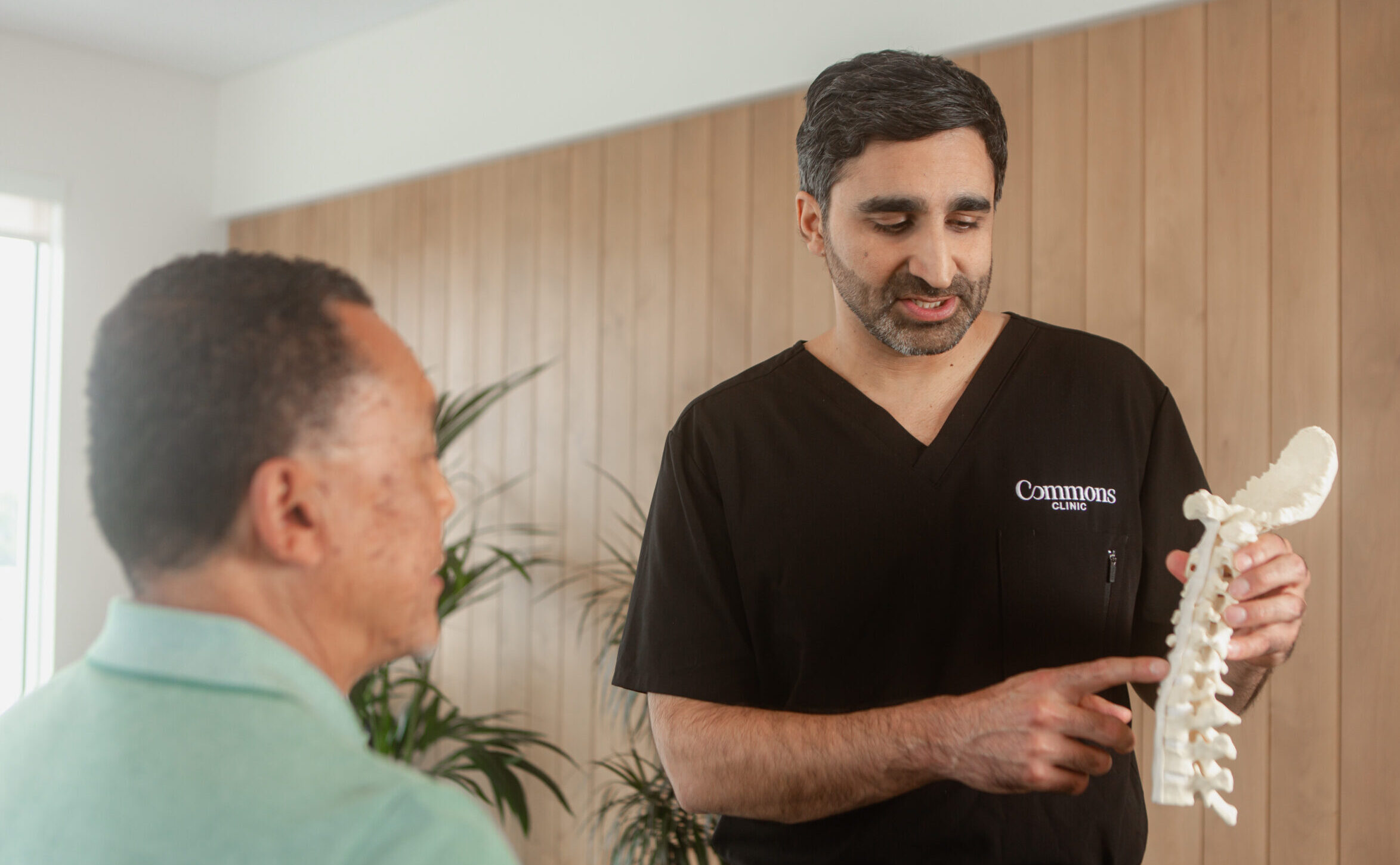
Tumors cause problems in two ways: they weaken bone, which can fracture, and they take up space, which can press on the spinal cord and nerves. Dr. Bhalla works alongside oncologists and radiation specialists so that your plan treats the cancer and protects your spine at the same time. Surgery, when it is needed, is aimed at relieving pressure, stabilizing the spine and preserving your ability to move.
Causes
Types of spinal tumors
Where a tumor sits and where it came from determine how it behaves and how it is treated.
Metastatic tumors
Cancer that has spread to the spine from another organ. The most common spinal tumor by far.
Primary bone tumors
Tumors that start in the vertebrae, such as chordoma, osteosarcoma or giant cell tumor. Rare.
Multiple myeloma and lymphoma
Blood cancers that can weaken vertebrae and are usually treated with medication and radiation.
Benign bone tumors
Hemangiomas, osteoid osteomas and others that are not cancer and often need no treatment.
Tumors inside the canal
Meningiomas and nerve sheath tumors that grow around the cord. Usually benign but can press on nerves.
Tumors within the cord
Astrocytomas and ependymomas that grow inside the spinal cord itself. Rare and treated by specialized teams.
Symptoms
What to watch for
Back pain is by far the most common first sign. What sets tumor pain apart is how it behaves.
Common symptoms
- Back or neck pain that is worse at night or wakes you from sleep
- Pain that does not ease with rest or changing position
- Pain that keeps getting worse over weeks
- Pain in someone with a known cancer
- Numbness, tingling or weakness in the arms or legs
- Difficulty walking or loss of balance
See a doctor right away if
- Rapidly worsening weakness in the legs or arms
- New trouble with bladder or bowel control
- Sudden severe back pain in someone with cancer
- Numbness that is spreading or climbing
These can be signs of a problem that needs urgent care. Call (562) 427-8119 or go to the nearest emergency room.
Diagnosis
How we evaluate it
A clear picture of the tumor, the strength of the bone around it and the overall cancer plan guide every decision.
01/Listen
History and examination
Your pain pattern, any known cancer, and a careful check of strength, sensation and walking.
02/Image
MRI and CT
MRI shows the tumor and any pressure on the cord. CT shows how much bone is involved and whether it is stable.
03/Stage
Finding the source
Blood tests, body scans and sometimes a biopsy identify what kind of tumor it is and whether it is elsewhere.
04/Plan
Team decision
Dr. Bhalla, your oncologist and radiation specialist agree on a plan and explain it to you in plain language.
Treatment
How it is treated
Treatment is tailored to the tumor type, your symptoms and your overall health. Many tumors are managed without surgery, and surgery, when needed, is focused on protecting your nerves and your mobility.
First: without surgery
Where almost everyone starts
- Radiation therapy, including highly focused stereotactic radiosurgery
- Chemotherapy, hormone or targeted therapy for the underlying cancer
- Steroids to quickly reduce swelling around the cord
- Bracing and pain management
- Observation with regular imaging for benign tumors
When needed: surgery
The least invasive option that will work
- Decompression to relieve pressure on the spinal cord or nerves
- Stabilization with screws and rods when bone is weakened
- Cement augmentation (kyphoplasty) for painful tumor fractures
- Tumor removal for selected primary tumors
- Minimally invasive techniques to shorten recovery and allow other treatments to continue

Everyday care
Living well through treatment
Treatment for a spinal tumor is a team effort, and you are a central member of that team.
- 01Report new weakness, numbness or bladder changes immediately. Time matters for the nerves.
- 02Keep moving as much as your team allows. It protects strength and mood.
- 03Ask about a brace if sitting or standing is painful.
- 04Bring a family member to visits. Two sets of ears help with complex plans.
- 05Ask about physical therapy to maintain walking and balance.
- 06Lean on support services. Social workers and counselors are part of good cancer care.
Questions
Things patients ask about spinal tumors.
If your question is not here, call the office. We are happy to talk it through.
Does a spinal tumor mean I have cancer?
Not always. Several spinal tumors are benign and may need nothing more than monitoring. When the tumor is cancerous, it is most often spread from another site, and treating it is part of a broader cancer plan.
Will I need surgery?
Many spinal tumors are treated with radiation and medication alone. Surgery is recommended when the tumor is pressing on the spinal cord or nerves, when the spine is unstable, or when a fracture is causing severe pain.
Can surgery cure the tumor?
For some benign and selected primary tumors, yes. For metastatic tumors, the goal of surgery is to relieve pressure, stabilize the spine and preserve function while other treatments address the cancer itself.
How quickly do I need to be seen?
If you have a known cancer and new back pain, within days. If you have weakness, numbness or bladder changes, the same day. Early treatment gives the best chance of protecting the nerves.
Near you
Spinal tumors treatment in Long Beach, CA
If you are living with spinal tumors in Long Beach or a nearby city, Dr. Bhalla can examine you, explain your options and plan the least invasive treatment that will work. Dr. Bhalla leads the Spine Center at MemorialCare Long Beach Medical Center.
Most people start with a consultation and imaging. Patients come from Signal Hill, Lakewood, Seal Beach, Orange County and across Southern California.
Patients come to us from
- Long Beach
- Signal Hill
- Lakewood
- Seal Beach
- Los Alamitos
- Cypress
- Bellflower
- Torrance
- Huntington Beach
- Carson
Not on the list? We see patients from across Southern California.
In the news
Dr. Bhalla on this topic.
Los Angeles Business Journal
Los Angeles' Top Doctors: Amandeep Bhalla
The Los Angeles Business Journal profiled Dr. Bhalla as one of Los Angeles' Top Doctors, a recognition he received in both 2021 and 2022.
2021

Los Angeles Business Journal
Leaders of Influence: Top Los Angeles Doctors
The Los Angeles Business Journal's Leaders of Influence series profiles Dr. Bhalla among the top doctors in Los Angeles, in the field of orthopedics.
2022

PR Newswire
Dr. Amandeep Bhalla named Medical Director of the Spine Center at MemorialCare Long Beach Medical Center
The 2021 announcement, distributed by PR Newswire, of Dr. Bhalla's appointment to lead the Spine Center.
March 3, 2021
Related services
How we treat it.

Non-Surgical Care
Evaluation, physical therapy, medication and targeted treatment first. Surgery only when it is truly the answer.
Learn more
Minimally Invasive Spinal Surgery
Small incisions, muscle-sparing tools and faster recovery for the neck and back.
Learn more
Revision Spinal Surgery
Expert care when a previous spine surgery has not delivered the result you hoped for.
Learn more