

Lumbar spine · Long Beach, CA
Lumbar stenosis in Long Beach, CA
Lumbar stenosis is a narrowing of the spinal canal in the lower back. Its signature is legs that ache, tire or go numb when you walk, and feel better when you sit or lean forward.
Lumbar stenosis care in Long Beach, with patients welcome from across South Bay, Orange County and the greater Los Angeles area.
Overview
What is lumbar stenosis?
The nerves to the legs travel through the lumbar spinal canal. With age, the discs bulge, the facet joints enlarge and the ligaments thicken, all of which narrow that canal. When the nerves are squeezed, they do not get enough blood flow when you stand and walk, and the legs become heavy, painful or numb. Bending forward or sitting opens the canal and relieves the symptoms, which is why people with stenosis lean on a shopping cart and do better on a bicycle than on foot.
Lumbar stenosis is the most common reason for spine surgery in people over 65, but surgery is far from inevitable. Many people manage well for years with activity, therapy and injections. When walking distance shrinks to the point that it limits your life, a minimally invasive decompression is a very effective solution.
Causes
What narrows the canal
Stenosis is usually the sum of several age related changes rather than one single problem.
Facet joint enlargement
Arthritic joints at the back of the spine grow larger and crowd the canal.
Thickened ligaments
The ligamentum flavum buckles and thickens with age, narrowing the canal from behind.
Bulging discs
Worn discs push backward into the front of the canal.
Spondylolisthesis
A vertebra slipping forward, which kinks the canal and often accompanies stenosis.
Bone spurs
Extra bone around the discs and joints that narrows the nerve openings.
Congenital narrowing
A canal that was small from birth and becomes symptomatic with less wear.
Symptoms
What it feels like
The pattern is so characteristic that it has its own name: neurogenic claudication.
Common symptoms
- Aching, heaviness, cramping or weakness in the legs when walking or standing
- Numbness or tingling in the legs that increases with distance
- Relief within minutes of sitting or leaning forward
- Walking distance that has gradually shrunk
- Easier on a bicycle or pushing a cart than walking upright
- Low back pain, often present but not the main problem
See a doctor right away if
- Numbness in the groin or inner thighs
- Difficulty controlling the bladder or bowel
- Rapidly progressing leg weakness
- Pain at rest or at night that is getting worse
These can be signs of a problem that needs urgent care. Call (562) 427-8119 or go to the nearest emergency room.
Diagnosis
How we confirm it
The story usually makes the diagnosis. Imaging confirms where the narrowing is and how severe.
01/Listen
Walking tolerance
How far you can walk, what brings relief and how this has changed over time.
02/Examine
Examination
Strength, reflexes and sensation, posture when walking, and checks on hip and circulation problems that mimic stenosis.
03/Image
MRI
Shows the degree and levels of narrowing. Standing X rays check for slippage and instability.
04/Plan
Match severity to symptoms
Dr. Bhalla explains how your imaging relates to your walking and lays out the options from therapy to decompression.
Treatment
How it is treated
Stenosis progresses slowly, so there is time to try conservative care. Surgery is for people whose walking and daily life are significantly limited despite it.
First: without surgery
Where almost everyone starts
- Physical therapy with flexion based exercises and core strengthening
- Walking, cycling and water exercise to stay fit within your limits
- Anti inflammatory and nerve pain medication
- Epidural steroid injections for flares
- Weight management to reduce load on the lower back
When needed: surgery
The least invasive option that will work
- Minimally invasive laminectomy to remove the thickened bone and ligament
- Foraminotomy to open narrowed nerve exits
- Decompression with fusion when there is slippage or instability
- Outpatient or overnight stay for most decompressions

Everyday care
Walking further with stenosis
Simple strategies keep you active and may delay or avoid the need for surgery.
- 01Keep walking daily, in several shorter sessions if needed.
- 02Cycle or use a recumbent bike for fitness that does not provoke leg symptoms.
- 03Use a walking pole or cart to allow a slight forward lean on longer walks.
- 04Strengthen the core and glutes, which support the spine in a neutral position.
- 05Keep a healthy weight to reduce load on the canal.
- 06Track your walking distance. It is the best measure of whether stenosis is changing.
Questions
Things patients ask about lumbar stenosis.
If your question is not here, call the office. We are happy to talk it through.
Will stenosis get worse?
It tends to progress slowly over years, with ups and downs. Many people remain stable for long periods. Surgery is a choice based on how much your life is limited, not something that must be done at a certain stage.
Is it my back or my circulation?
Both can cause leg pain with walking. Stenosis pain eases with sitting or bending forward and is often better on a bicycle; circulation pain eases simply with standing still. The examination can tell them apart.
What does decompression surgery involve?
Through a small incision, the thickened bone and ligament pressing on the nerves are removed, creating room for the nerves. It is usually done minimally invasively, often as an outpatient, and walking distance typically improves quickly.
Will I need a fusion?
Not usually. Fusion is added only when a vertebra has slipped or the spine is unstable. Most stenosis is treated with decompression alone, which preserves motion.
Near you
Lumbar stenosis treatment in Long Beach, CA
If you are living with lumbar stenosis in Long Beach or a nearby city, Dr. Bhalla can examine you, explain your options and plan the least invasive treatment that will work. Dr. Bhalla leads the Spine Center at MemorialCare Long Beach Medical Center.
Most people start with a consultation and imaging. Patients come from Signal Hill, Lakewood, Seal Beach, Orange County and across Southern California.
Patients come to us from
- Long Beach
- Signal Hill
- Lakewood
- Seal Beach
- Los Alamitos
- Cypress
- Bellflower
- Torrance
- Huntington Beach
- Carson
Not on the list? We see patients from across Southern California.
In the news
Dr. Bhalla on this topic.
Long Beach Business Journal
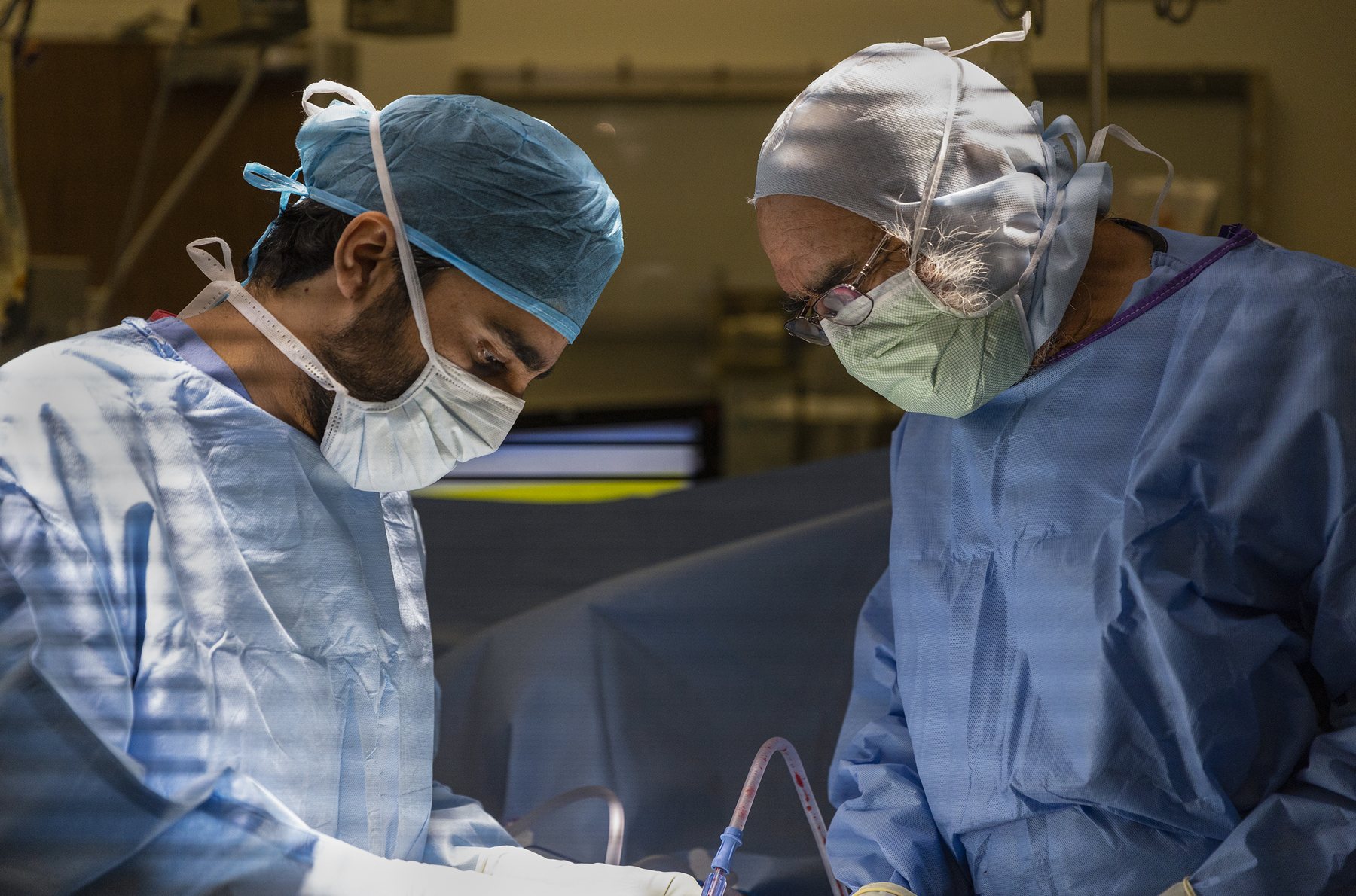
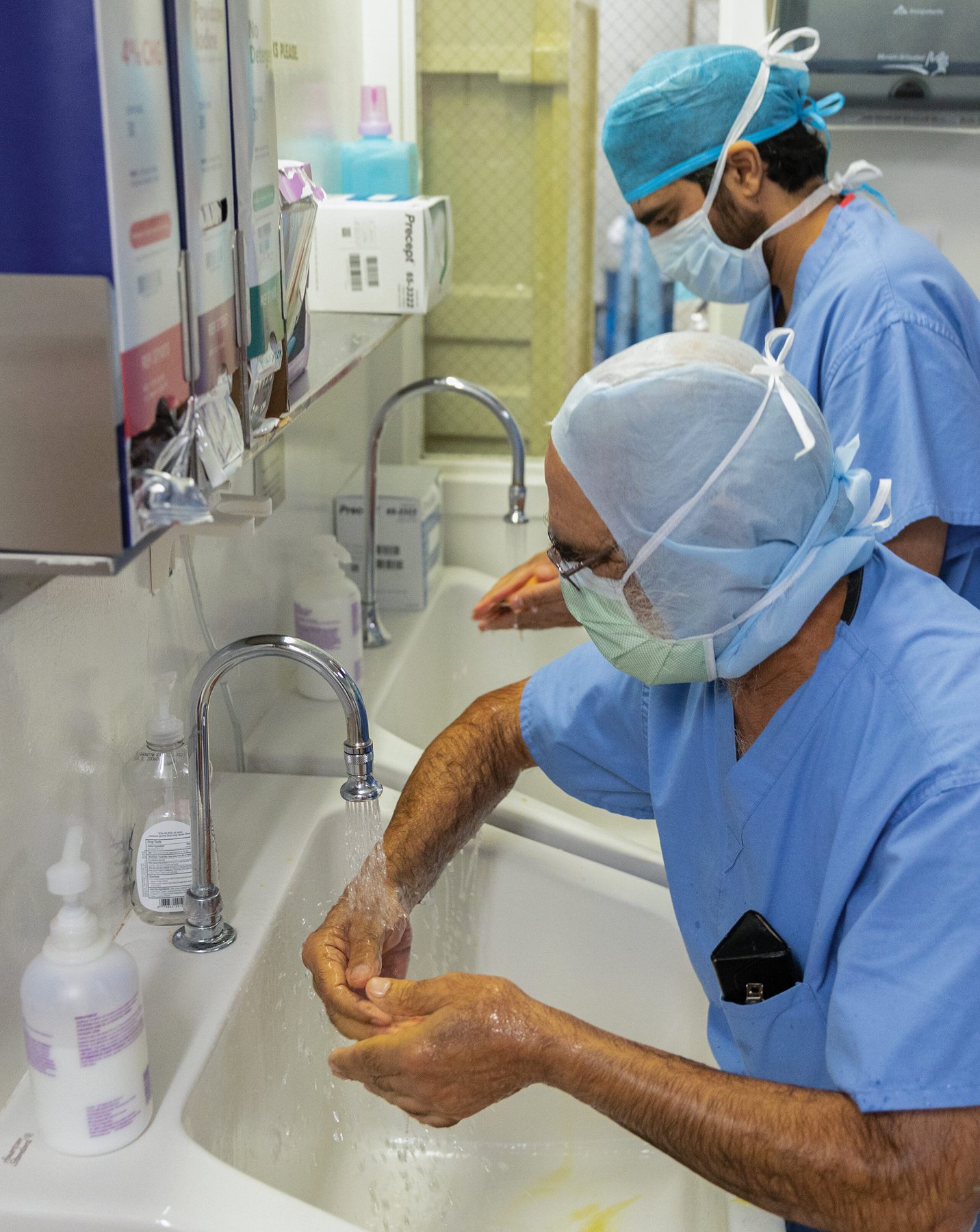
A "surreal experience": Father and son surgical team repair spines in Long Beach
The Long Beach Business Journal spent a day in the operating room with Dr. Amandeep Bhalla and his father, Dr. Sarbpaul Bhalla.
May 18, 2022
Becker's Spine Review
Named one of the 150 best spine surgeons in America by Newsweek
Becker's Spine Review reported Newsweek's 2024 list of America's best spine surgeons. Dr. Bhalla is among the surgeons recognized.
June 12, 2024
MemorialCare
Improving patient outcomes with image guided spine surgery
On MemorialCare's Daily Dose of Wellness podcast, Dr. Bhalla explains how real time 3D navigation and robotics make spine surgery more precise and recovery faster.
November 25, 2024
Press-Telegram
Father and son surgeons team up to provide high tech spinal care in Long Beach
The Press-Telegram reported on Dr. Amandeep Bhalla and his father, Dr. Sarbpaul Bhalla, bringing robotic spine surgery to Long Beach Medical Center.
October 21, 2020
Related services
How we treat it.
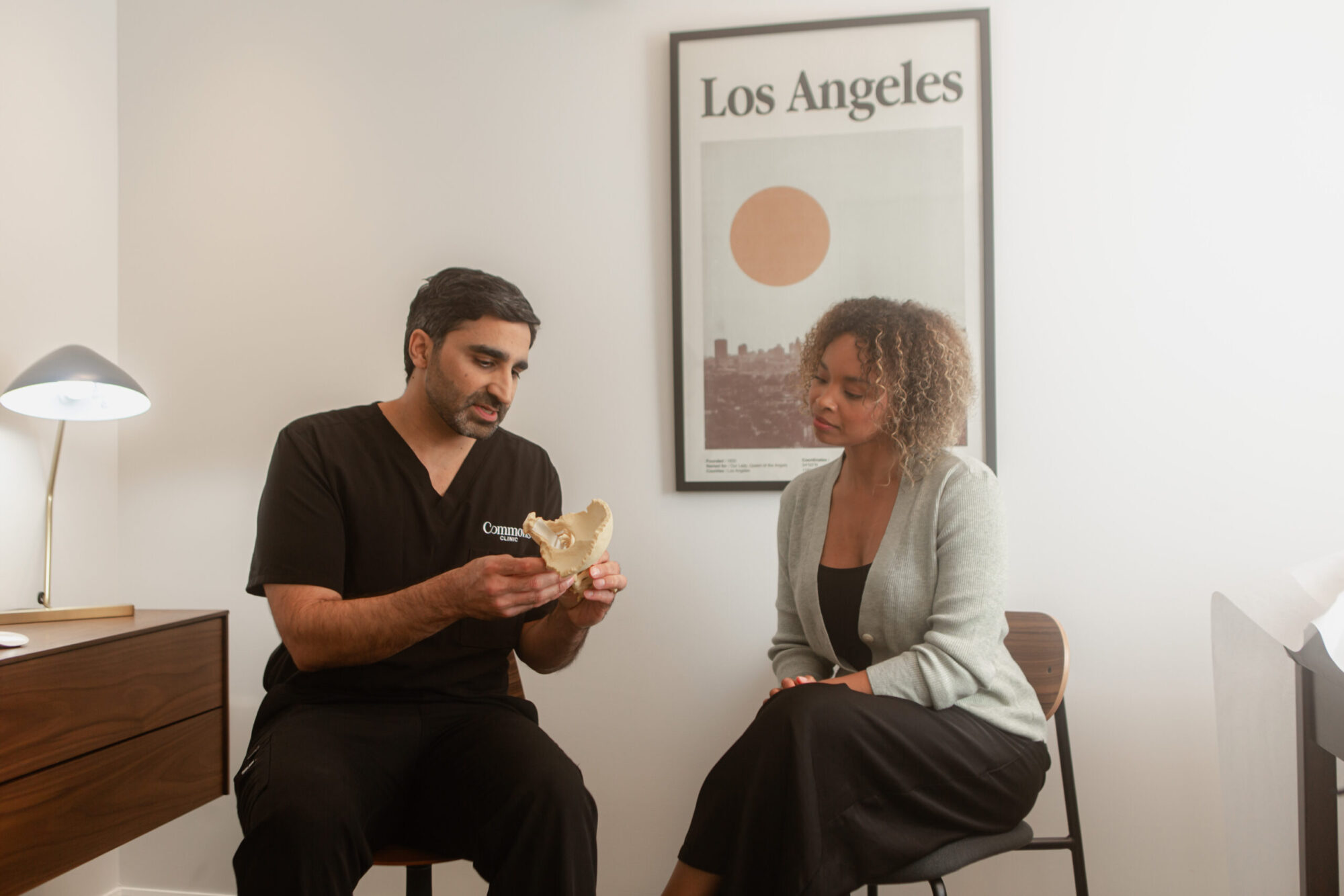
Non-Surgical Care
Evaluation, physical therapy, medication and targeted treatment first. Surgery only when it is truly the answer.
Learn more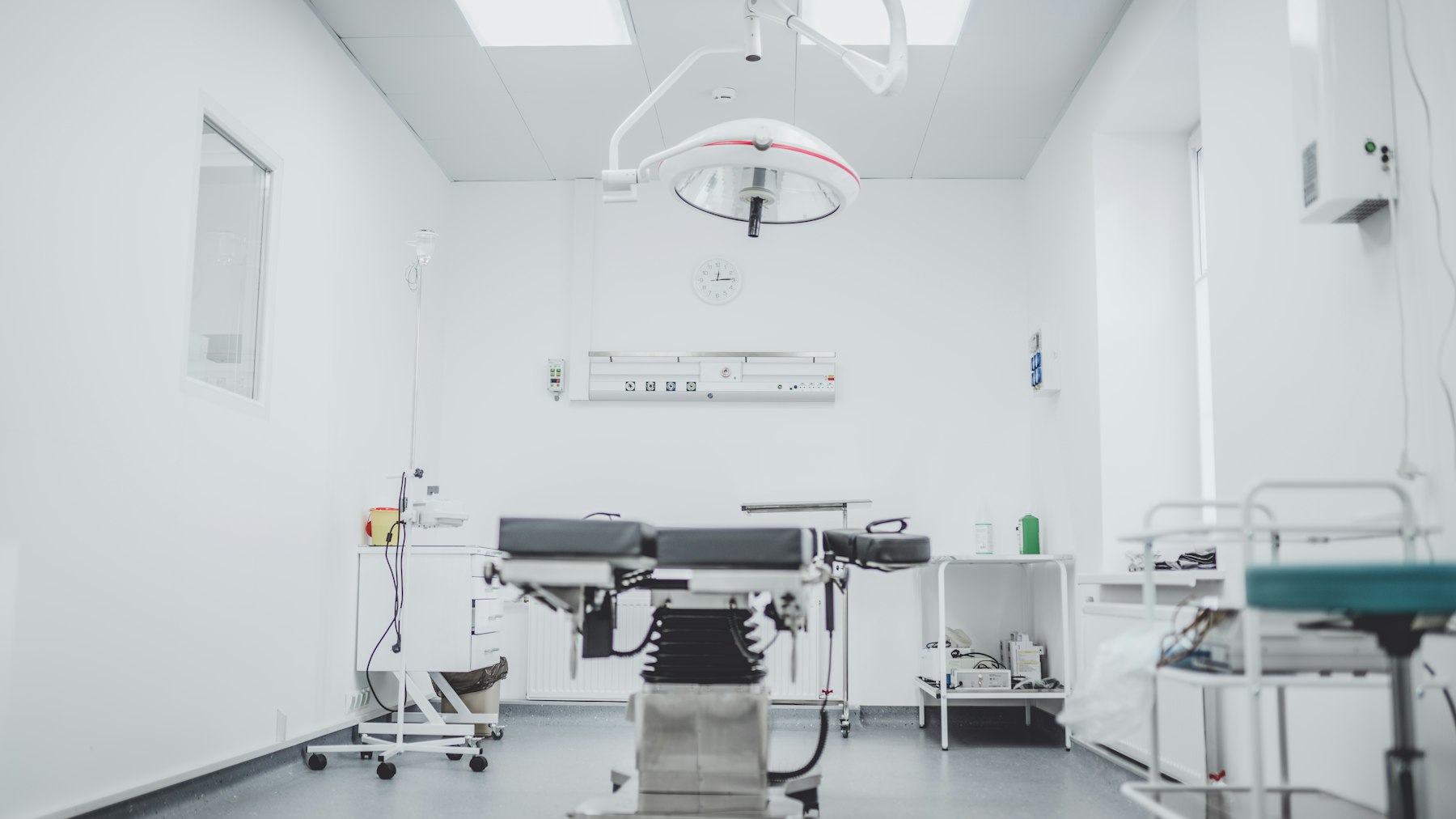
Minimally Invasive Spinal Surgery
Small incisions, muscle-sparing tools and faster recovery for the neck and back.
Learn more
Outpatient Spinal Surgery
Spine procedures done in a day, with recovery at home the same evening.
Learn more