
Cervical spine · Long Beach, CA
Cervical radiculopathy in Long Beach, CA
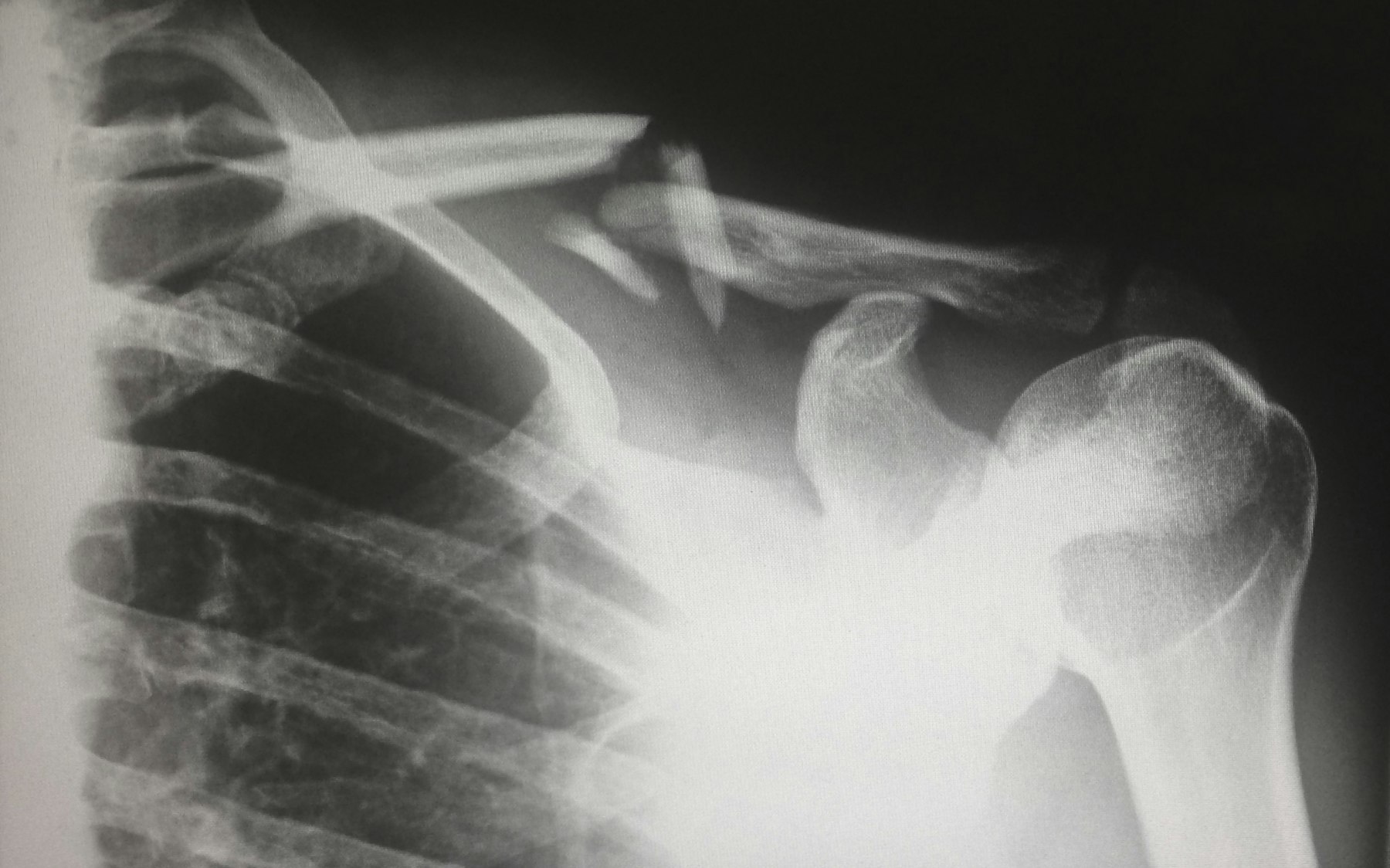
Cervical radiculopathy is a pinched nerve in the neck. The pain is felt in the arm, which is why it is often mistaken for a shoulder or elbow problem.
Cervical radiculopathy care in Long Beach, with patients welcome from across South Bay, Orange County and the greater Los Angeles area.
Overview
What is cervical radiculopathy?
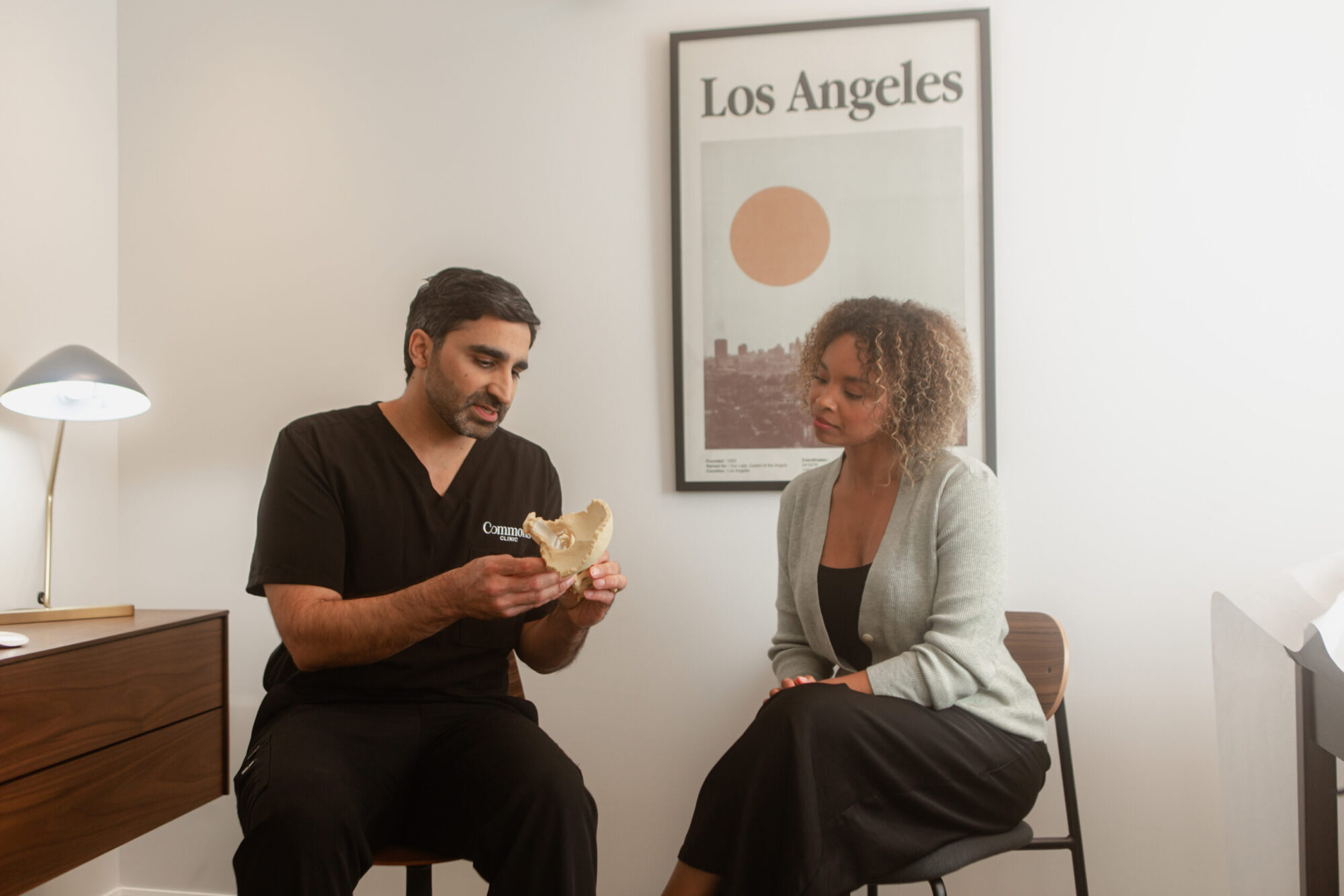
Eight pairs of nerve roots leave the cervical spine through small openings between the vertebrae. Each one supplies a specific area of the shoulder, arm and hand. Radiculopathy means one of those roots is being compressed or irritated where it exits. The result is pain, tingling, numbness or weakness along the path of that nerve.
In younger adults the usual cause is a herniated disc. In people over 50 it is more often bone spurs and disc narrowing that shrink the opening the nerve passes through. Either way, the outlook is good: most people recover with time and conservative care, and those who do not have excellent surgical options.
Causes
What pinches the nerve
Anything that narrows the opening where a nerve root leaves the spine can irritate it.
Herniated disc
Disc material pressing directly on the nerve root. The most common cause under 50.
Bone spurs
Arthritic bone growth around the disc and facet joints that narrows the nerve opening.
Disc narrowing
A worn disc loses height, which shrinks the space the nerve passes through.
Facet joint arthritis
Enlarged, arthritic joints behind the spine that crowd the nerve from the back.
Injury
A sudden strain or whiplash can inflame a nerve root even without a herniation.
Instability
Excess movement between vertebrae that repeatedly irritates the nerve.
Symptoms
What it feels like
Arm symptoms are the hallmark. Neck pain may be mild or absent entirely.
Common symptoms
- Sharp, burning or electric pain running from the neck into the arm
- Tingling or numbness in part of the hand or specific fingers
- Weakness in the shoulder, biceps, triceps or grip
- Pain worse when looking up, turning the head or coughing
- Relief when lifting the arm and resting the hand on the head
- Aching between the shoulder blades
See a doctor right away if
- Weakness that is getting worse
- Symptoms in both arms or in the legs
- Clumsy hands or unsteady walking
- Loss of bladder or bowel control
These can be signs of a problem that needs urgent care. Call (562) 427-8119 or go to the nearest emergency room.
Diagnosis
How we find it
The examination identifies which nerve root is involved. Imaging confirms why.
01/Listen
Mapping the symptoms
Where the pain travels and which fingers tingle identify the nerve root.
02/Examine
Neurological examination
Strength, reflexes and sensation for each root, and provocation tests that reproduce the arm pain.
03/Image
MRI, sometimes CT
MRI shows the disc or bone pressing on the root. CT adds bone detail when spurs are suspected.
04/Confirm
Nerve studies if unclear
EMG and nerve conduction tests separate a neck problem from carpal tunnel or a shoulder condition.
Treatment
How it is treated
Between 75 and 90 percent of people with cervical radiculopathy improve without surgery. The rest can be treated with a short procedure that decompresses the nerve.
First: without surgery
Where almost everyone starts
- Activity modification and a short period of relative rest
- Physical therapy, including gentle traction and nerve gliding
- Anti inflammatory medication or a short oral steroid course
- Medication for nerve pain
- Image guided epidural steroid injection
When needed: surgery
The least invasive option that will work
- Posterior foraminotomy to open the nerve opening through a small incision
- Cervical disc replacement when a disc is the cause
- Anterior cervical discectomy and fusion for selected cases
- Outpatient procedures with same day discharge in most cases

Everyday care
Calming an irritated nerve
Small changes reduce the daily irritation to the nerve while it recovers.
- 01Keep your head balanced over your shoulders, not forward of them.
- 02Avoid prolonged looking up, such as ceiling work, during a flare.
- 03Use a headset instead of cradling a phone between ear and shoulder.
- 04Choose a pillow that keeps your neck level in your usual sleeping position.
- 05Keep moving with walking and gentle neck mobility rather than resting fully.
- 06Build the upper back and deep neck muscles once the acute pain settles.
Questions
Things patients ask about cervical radiculopathy.
If your question is not here, call the office. We are happy to talk it through.
How do I know it is my neck and not my shoulder?
Neck related arm pain usually travels below the elbow, comes with tingling in specific fingers and changes with head position. Shoulder pain stays around the shoulder and changes with arm movement. The examination can tell them apart.
How long does it take to get better?
Most people improve over six to twelve weeks. Numbness can take longer than pain to fade. If symptoms are not improving by then, or weakness is developing, it is time to discuss further options.
Is surgery a big operation?
No. Both posterior foraminotomy and disc replacement are performed through small incisions, usually as outpatient procedures, with most patients back to light activity within a week or two.
Will the numbness go away after surgery?
Pain usually eases quickly. Numbness and weakness recover more slowly as the nerve heals, and a nerve that has been compressed for a long time may not recover completely, which is one reason not to delay treatment when weakness is present.
Near you
Cervical radiculopathy treatment in Long Beach, CA
If you are living with cervical radiculopathy in Long Beach or a nearby city, Dr. Bhalla can examine you, explain your options and plan the least invasive treatment that will work. Dr. Bhalla leads the Spine Center at MemorialCare Long Beach Medical Center.
Most people start with a consultation and imaging. Patients come from Signal Hill, Lakewood, Seal Beach, Orange County and across Southern California.
Patients come to us from
- Long Beach
- Signal Hill
- Lakewood
- Seal Beach
- Los Alamitos
- Cypress
- Bellflower
- Torrance
- Huntington Beach
- Carson
Not on the list? We see patients from across Southern California.
Related services
How we treat it.
Non-Surgical Care
Evaluation, physical therapy, medication and targeted treatment first. Surgery only when it is truly the answer.
Learn more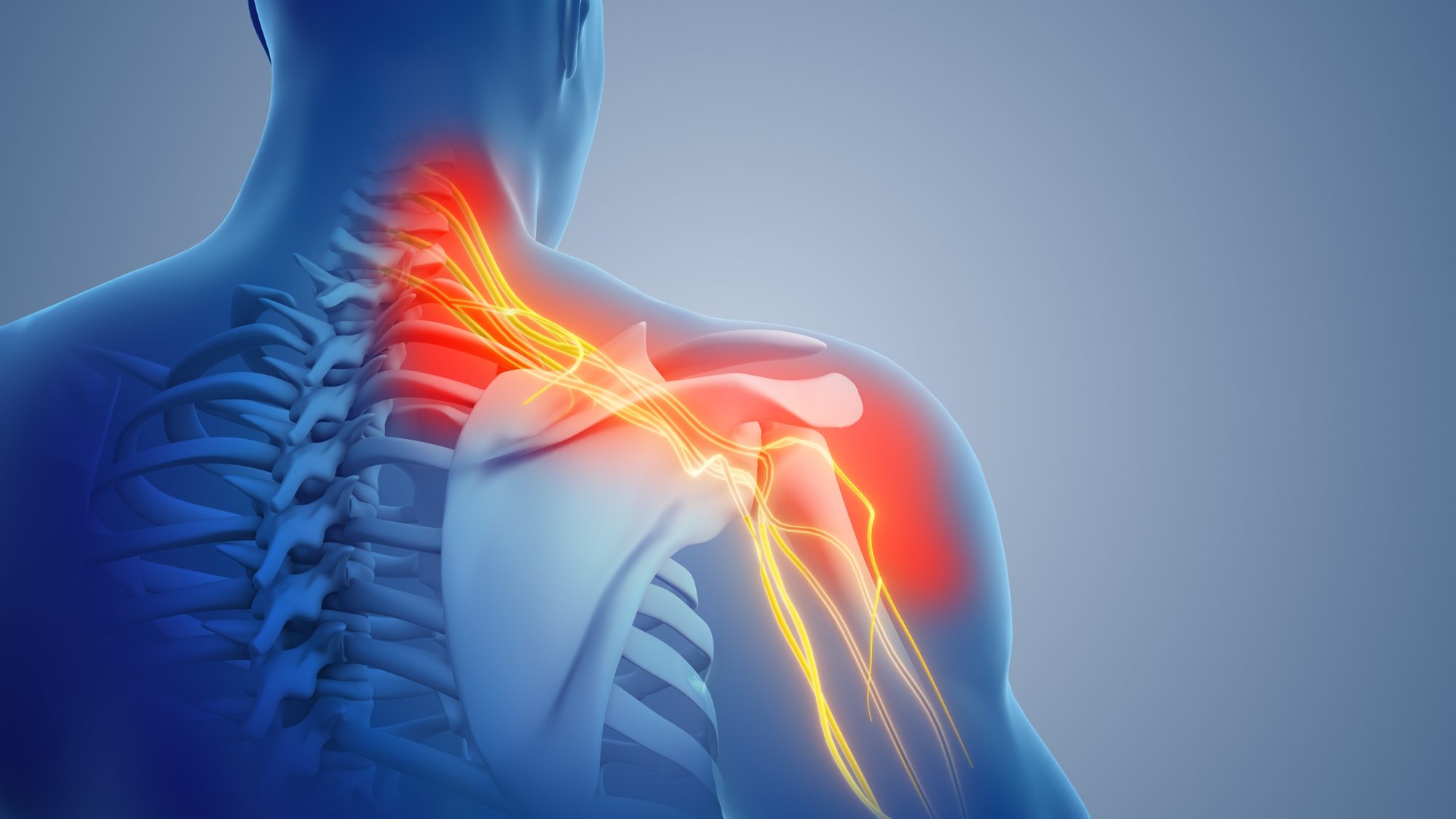
Cervical Disc Replacement
Replace a worn neck disc with a moving implant instead of a fusion.
Learn more
Minimally Invasive Spinal Surgery
Small incisions, muscle-sparing tools and faster recovery for the neck and back.
Learn more