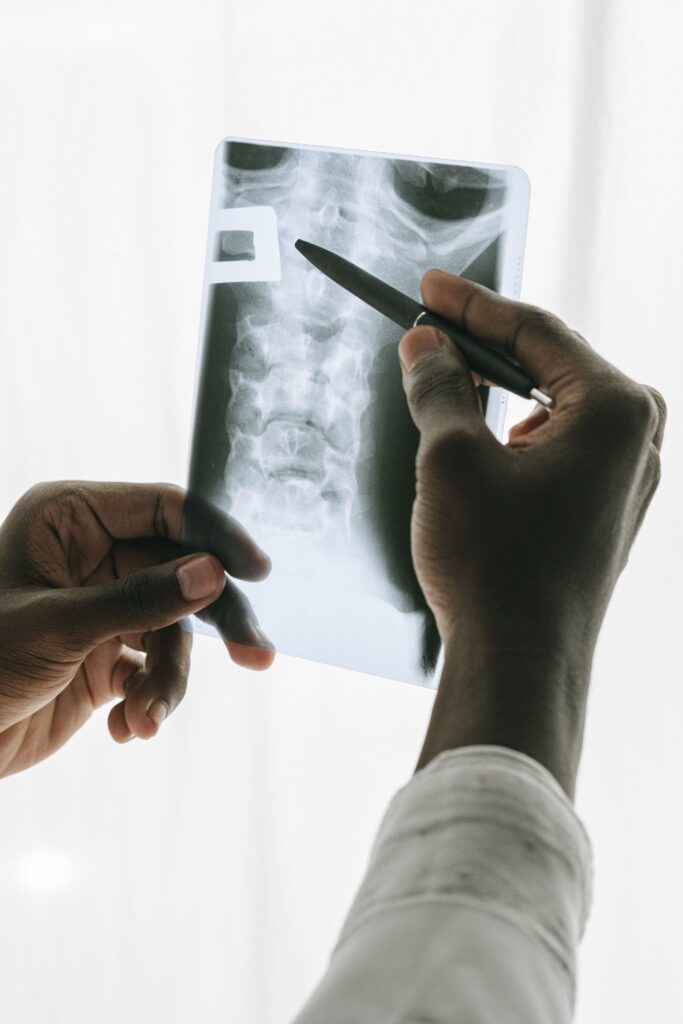
A cervical herniated disc can cause more than just neck pain—it can lead to radiating arm pain, numbness, tingling, muscle weakness, and difficulty performing everyday activities. Whether your symptoms developed gradually or appeared after an injury, getting the right diagnosis is the first step toward lasting relief.
At Bhalla Spine, board-certified spine surgeon Dr. Amandeep Bhalla provides comprehensive evaluation and personalized treatment for cervical herniated discs. Using the latest minimally invasive spine techniques whenever appropriate, Dr. Bhalla helps patients relieve pain, restore function, and return to living active lives.
What Is a Cervical Herniated Disc?
Your cervical spine consists of seven vertebrae separated by soft spinal discs that act as cushions between the bones.
A cervical herniated disc occurs when the tough outer layer of a disc tears or weakens, allowing the soft inner material to push outward. When this material presses against nearby spinal nerves, it can cause pain and neurological symptoms extending into the shoulders, arms, and hands.
This condition is commonly referred to as:
- Slipped disc
- Bulging disc
- Ruptured disc
- Herniated cervical disc
While these terms are often used interchangeably, the severity and treatment recommendations may differ.
What Causes a Cervical Herniated Disc?
Several factors can contribute to disc herniation, including:
- Natural aging and disc degeneration
- Repetitive neck movements
- Poor posture
- Heavy lifting
- Sports injuries
- Car accidents
- Sudden trauma
- Occupations requiring repetitive neck strain
As discs lose water content with age, they become less flexible and more susceptible to injury.
Common Symptoms of a Cervical Herniated Disc
Symptoms vary depending on which nerve is affected and how much pressure is being placed on the spinal cord or nerve roots.
Common symptoms include:
- Neck pain
- Pain radiating into the shoulder
- Arm pain
- Tingling in the fingers
- Hand numbness
- Muscle weakness
- Difficulty gripping objects
- Burning or electric shock sensations
- Reduced range of motion
- Pain when turning the head
Some patients notice symptoms worsening while driving, working at a computer, or sleeping.
How Is a Cervical Herniated Disc Diagnosed?
A proper diagnosis begins with a thorough physical examination and review of your medical history.
Dr. Bhalla carefully evaluates:
- Muscle strength
- Reflexes
- Sensation
- Range of motion
- Balance
- Neurological function
Advanced imaging may include:
- MRI
- X-rays
- CT scan (when necessary)
An accurate diagnosis allows treatment to focus on the true source of your pain instead of simply masking symptoms.
Do All Cervical Herniated Discs Require Surgery?
No.
Many patients improve with conservative treatment, especially during the early stages.
Non-surgical options may include:
- Physical therapy
- Anti-inflammatory medications
- Activity modification
- Epidural steroid injections
- Home exercise programs
- Lifestyle modifications
The goal is to reduce inflammation, relieve nerve pressure, and restore normal movement whenever possible.
When Is Surgery Recommended?
Surgery may be considered if you experience:
- Persistent pain despite conservative treatment
- Progressive muscle weakness
- Significant numbness
- Loss of hand function
- Spinal cord compression
- Difficulty walking
- Reduced quality of life
Every patient is unique, and treatment decisions are based on symptoms, imaging findings, activity level, and personal goals.
Minimally Invasive Spine Surgery
When surgery is necessary, Dr. Bhalla specializes in minimally invasive spine procedures designed to reduce tissue disruption while effectively treating the source of nerve compression.
Potential benefits include:
- Smaller incisions
- Less muscle damage
- Reduced postoperative pain
- Lower risk of infection
- Faster recovery
- Shorter hospital stays
- Earlier return to daily activities
Whenever appropriate, minimally invasive techniques can help patients recover more comfortably while achieving excellent long-term outcomes.
Why Choose Dr. Amandeep Bhalla?
Choosing the right spine surgeon is one of the most important decisions you’ll make.
Dr. Amandeep Bhalla is a board-certified spine surgeon with extensive experience treating both common and complex spinal conditions. His practice focuses on delivering personalized care using evidence-based treatments and advanced minimally invasive surgical techniques.
Patients appreciate his compassionate approach, taking the time to understand their symptoms, explain every treatment option, and develop individualized care plans that align with their goals.
Whether you’re dealing with chronic neck pain, a cervical herniated disc, spinal degeneration, or a more complex spine condition, Dr. Bhalla is committed to helping you regain mobility, reduce pain, and improve your quality of life.
Expert Cervical Herniated Disc Treatment
Living with neck pain and nerve symptoms doesn’t have to become your new normal.
If you’re experiencing persistent neck pain, arm pain, numbness, tingling, or weakness, early evaluation can help prevent worsening symptoms and identify the most effective treatment plan.
Dr. Bhalla proudly provides expert spine care for patients throughout Los Angeles, Beverly Hills, West Hollywood, Santa Monica, Culver City, Marina del Rey, and surrounding Southern California communities.
Whether your treatment involves physical therapy, injections, or advanced minimally invasive spine surgery, you’ll receive personalized care focused on helping you get back to the life you enjoy.
Schedule a consultation today to learn your treatment options and take the first step toward lasting neck pain relief.
Frequently Asked Questions
Can a cervical herniated disc heal without surgery?
Yes. Many cervical herniated discs improve with conservative treatment, including physical therapy, medications, and activity modification. Surgery is generally reserved for persistent pain, progressive weakness, or neurological symptoms.
What are the warning signs of a cervical herniated disc?
Common symptoms include neck pain, arm pain, tingling, numbness, muscle weakness, and pain that radiates into the shoulder or hand.
When should I see a spine specialist?
If your symptoms last longer than a few weeks, continue to worsen, or include weakness or numbness, it’s important to be evaluated by a spine specialist.
Is minimally invasive spine surgery effective?
For appropriately selected patients, minimally invasive spine surgery can effectively relieve nerve compression while minimizing muscle disruption and often allowing for a quicker recovery than traditional open procedures.
Can a cervical herniated disc cause arm pain?
Yes. When a herniated disc compresses a nerve root in the neck, pain, numbness, tingling, or weakness may radiate into the shoulder, arm, and hand.