
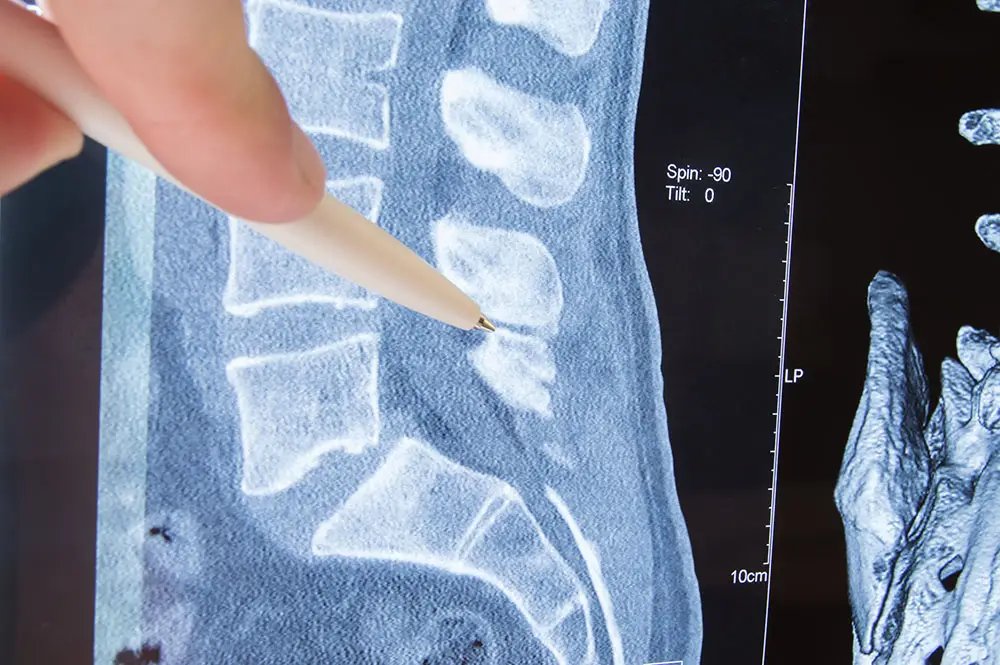
Thoracic spine · Long Beach, CA
Thoracic stenosis and myelopathy in Long Beach, CA
The mid back is the most protected part of the spine, so narrowing there is uncommon. When it does press on the spinal cord, it affects the legs, balance and walking, and it needs expert attention.
Thoracic stenosis and myelopathy care in Long Beach, with patients welcome from across South Bay, Orange County and the greater Los Angeles area.
Overview
What is thoracic stenosis and myelopathy?
The thoracic spine is the twelve vertebrae between the neck and the lower back, anchored by the rib cage. Thoracic stenosis is a narrowing of the spinal canal in this region. Because the canal here is naturally tight and the spinal cord fills most of it, even modest narrowing can press on the cord. When the cord is compressed enough to cause symptoms, that is called thoracic myelopathy.
Thoracic myelopathy is rare compared with the same problem in the neck, and because the symptoms are vague at first, it is often diagnosed late. The cord does not have the capacity to repair itself, so the goal is to recognize compression early and relieve it before damage becomes permanent. Dr. Bhalla treats thoracic cord compression with careful imaging and, when needed, precise decompression surgery.

Causes
What narrows the canal
Several different processes can crowd the thoracic spinal cord. Finding out which one is present guides treatment.
Thickened ligaments
The ligamentum flavum behind the cord can thicken or turn to bone, the most common cause in the mid back.
Disc herniation
A thoracic disc bulging backward into the canal. Rare, but often calcified and hard.
Bone spurs and facet arthritis
Wear in the small joints produces bone that narrows the canal from the sides.
Compression fractures
Collapsed vertebrae from osteoporosis or injury can push bone into the canal.
Tumor or infection
A mass in or around the vertebrae that takes up space in the canal.
Congenital narrowing
Some people are born with a smaller canal and reach symptoms with less wear.
Symptoms
What it feels like
Thoracic cord compression affects everything below the level of the problem, which is why its signs show up in the legs and trunk.
Common symptoms
- Mid back pain, sometimes wrapping around the chest or ribs
- Numbness or tingling in the legs or a band like feeling around the trunk
- Heavy, stiff or weak legs
- Unsteady walking or needing to look at your feet
- Difficulty with stairs or getting out of a chair
- Changes in bladder or bowel control in later stages
See a doctor right away if
- Rapidly worsening leg weakness
- New loss of bladder or bowel control
- Sudden inability to walk
- Mid back pain with fever or a known cancer
These can be signs of a problem that needs urgent care. Call (562) 427-8119 or go to the nearest emergency room.
Diagnosis
How we confirm it
Thoracic myelopathy is easy to miss. A careful neurological examination and the right imaging are what make the diagnosis.
01/Listen
Your story
How walking and balance have changed, any trunk numbness and how quickly things are progressing.
02/Examine
Neurological examination
Reflexes, muscle tone, sensation level and gait. Brisk reflexes and a sensory level point to the thoracic cord.
03/Image
MRI of the whole spine
Shows the cord, the level and cause of compression and any signal change within the cord. CT adds bone and calcification detail.
04/Plan
Decide on timing
Dr. Bhalla weighs the degree of compression against your symptoms and explains whether to watch or to act.
Treatment
How it is treated
Mild narrowing without cord symptoms can be watched. Once myelopathy is present, surgery to relieve pressure on the cord is usually the right answer, because the cord does not recover from prolonged compression.
First: without surgery
Where almost everyone starts
- Monitoring with repeat examination and imaging for mild cases
- Physical therapy for balance and leg strength
- Pain management and activity modification
- Treatment of osteoporosis when fractures are the cause
- Fall prevention measures at home
When needed: surgery
The least invasive option that will work
- Laminectomy to remove thickened bone and ligament from behind the cord
- Removal of a thoracic disc through a posterolateral or lateral approach
- Fusion with instrumentation when bone removal would leave the spine unstable
- Neuromonitoring throughout surgery to protect the cord

Everyday care
Protecting your spinal cord
Whether you are being monitored or recovering from surgery, these habits protect the cord and keep you steady on your feet.
- 01Report any change in walking, balance or sensation promptly. Timing matters.
- 02Remove trip hazards at home and use rails on stairs.
- 03Keep legs strong with supervised exercise and balance training.
- 04Avoid heavy lifting and high impact activity while the cord is compressed.
- 05Keep bones strong with calcium, vitamin D and weight bearing exercise.
- 06Attend every follow up visit so progress can be measured over time.
Questions
Things patients ask about thoracic stenosis and myelopathy.
If your question is not here, call the office. We are happy to talk it through.
Why is thoracic stenosis less common than in the neck or lower back?
The rib cage stiffens the thoracic spine, so it moves less and wears more slowly. That protection is also why thoracic problems are often missed: doctors and patients tend to look at the neck and lower back first.
Will surgery get my walking back to normal?
Surgery reliably stops the condition from getting worse. How much function returns depends on how long and how severely the cord was compressed, which is why early treatment matters. Many patients improve substantially.
Is thoracic spine surgery risky?
The spinal cord makes thoracic surgery more delicate than lumbar surgery. Dr. Bhalla uses neuromonitoring, navigation and approaches that avoid retracting the cord to keep the procedure as safe as possible.
Can I just wait and see?
If you have narrowing without any cord symptoms, watching is reasonable. Once myelopathy is present, waiting risks permanent loss of function. Dr. Bhalla will tell you clearly which situation you are in.
Near you
Thoracic stenosis and myelopathy treatment in Long Beach, CA
If you are living with thoracic stenosis and myelopathy in Long Beach or a nearby city, Dr. Bhalla can examine you, explain your options and plan the least invasive treatment that will work. Dr. Bhalla leads the Spine Center at MemorialCare Long Beach Medical Center.
Most people start with a consultation and imaging. Patients come from Signal Hill, Lakewood, Seal Beach, Orange County and across Southern California.
Patients come to us from
- Long Beach
- Signal Hill
- Lakewood
- Seal Beach
- Los Alamitos
- Cypress
- Bellflower
- Torrance
- Huntington Beach
- Carson
Not on the list? We see patients from across Southern California.
Related services
How we treat it.
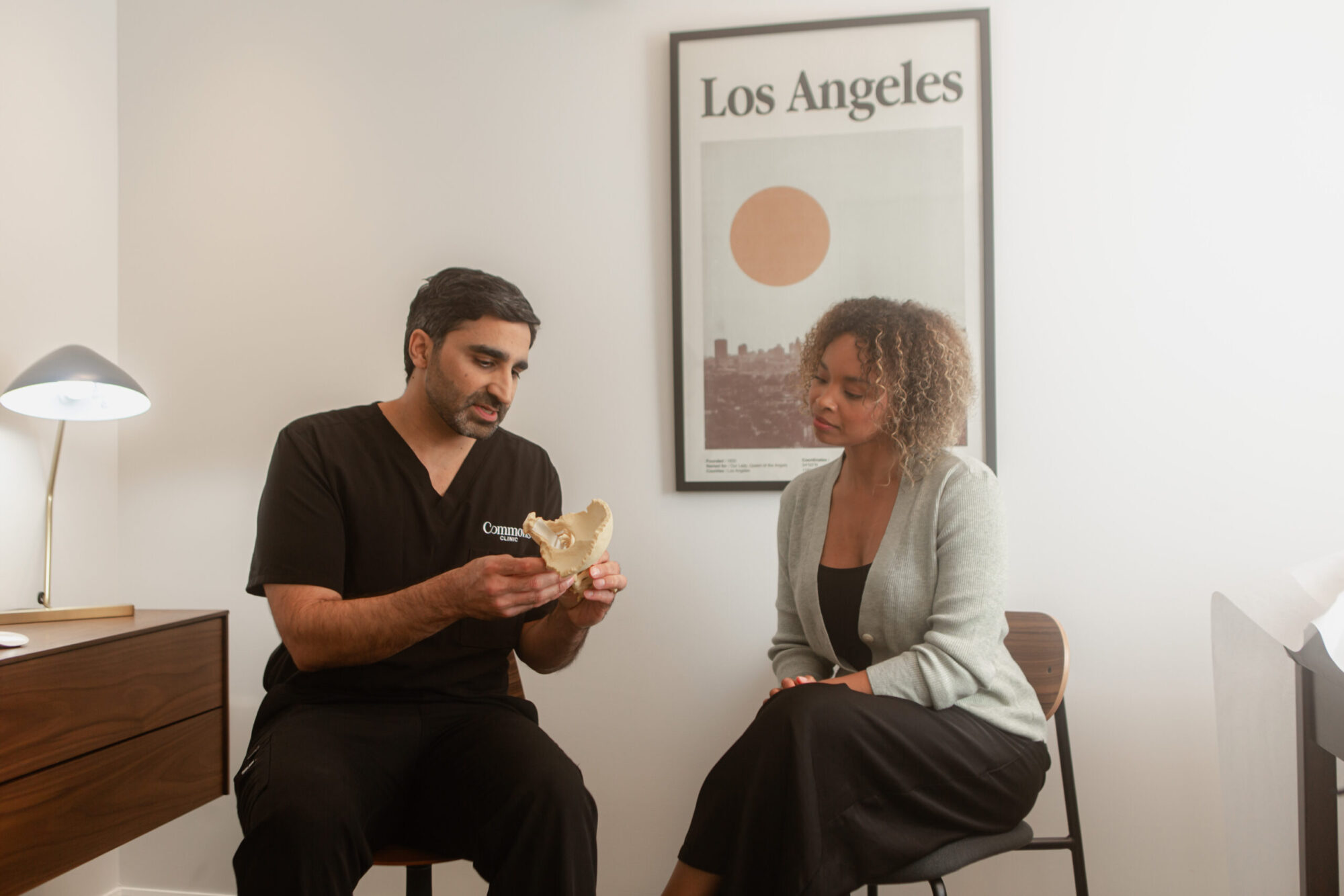
Non-Surgical Care
Evaluation, physical therapy, medication and targeted treatment first. Surgery only when it is truly the answer.
Learn more
Minimally Invasive Spinal Surgery
Small incisions, muscle-sparing tools and faster recovery for the neck and back.
Learn more
Revision Spinal Surgery
Expert care when a previous spine surgery has not delivered the result you hoped for.
Learn more