

Lumbar spine · Long Beach, CA
Lumbar radiculopathy in Long Beach, CA
Lumbar radiculopathy, better known as sciatica, is a pinched nerve in the lower back felt as pain down the leg. It is common, usually temporary and very treatable.
Lumbar radiculopathy care in Long Beach, with patients welcome from across South Bay, Orange County and the greater Los Angeles area.
Overview
What is lumbar radiculopathy?
Five pairs of nerve roots leave the lumbar spine and join to form the sciatic and femoral nerves that supply the legs. Radiculopathy means one of those roots is compressed or inflamed where it exits the spine. Because the nerve carries signals to and from a specific part of the leg, the pain, tingling and weakness follow that nerve's path, often all the way to the foot.
A herniated disc is the usual cause in younger adults; in older adults it is more often spinal stenosis or a slipped vertebra. Whatever the cause, most people recover over weeks with activity, therapy and time. Dr. Bhalla's role is to confirm the source, rule out anything serious and offer injections or a small procedure for the minority who do not improve.

Causes
What pinches the nerve
The nerve root can be squeezed by soft tissue, bone or movement, and the treatment differs for each.
Herniated disc
Disc material pressing on the root, the most common cause under 50.
Foraminal stenosis
Narrowing of the opening where the nerve leaves the spine, from disc collapse and bone spurs.
Spondylolisthesis
A vertebra that has slipped forward, stretching and pinching the nerves below it.
Facet joint cysts
Fluid filled sacs from an arthritic joint that press on a nerve.
Piriformis syndrome
Not from the spine at all: the sciatic nerve irritated by a buttock muscle. Treated differently.
Rare causes
Tumor, infection or a fracture fragment. Uncommon, but part of why evaluation matters.
Symptoms
What it feels like
The pattern of symptoms often identifies the nerve involved before any imaging.
Common symptoms
- Pain radiating from the buttock down the back, side or front of the leg
- Burning, electric or shooting quality to the pain
- Numbness or tingling in the leg, foot or toes
- Weakness lifting the foot, the big toe, or straightening the knee
- Pain worse with sitting, bending, coughing or sneezing
- Usually one leg, occasionally both
See a doctor right away if
- Numbness in the groin, inner thighs or around the rectum
- New difficulty passing urine or controlling the bowel
- Progressive or severe leg weakness
- Leg pain with fever, weight loss or a history of cancer
These can be signs of a problem that needs urgent care. Call (562) 427-8119 or go to the nearest emergency room.
Diagnosis
How we find it
A careful examination localizes the nerve. Imaging is used when it will change what we do.
01/Listen
Tracing the pain
Where the pain travels and which part of the foot tingles identify the root.
02/Examine
Nerve tests
Straight leg raise, femoral stretch, reflexes, sensation and the strength of specific muscles.
03/Image
MRI for persistent symptoms
Shows whether a disc, bone or slippage is responsible and guides any injection or surgery.
04/Confirm
Nerve studies if unclear
EMG separates a spinal cause from peripheral nerve problems such as piriformis syndrome or neuropathy.
Treatment
How it is treated
The large majority of sciatica improves without surgery. The small minority with persistent pain or weakness can be treated with a short, minimally invasive procedure.
First: without surgery
Where almost everyone starts
- Staying active and walking, with short rests as needed
- Physical therapy including nerve gliding and core work
- Anti inflammatory medication or a short steroid course
- Medication for nerve pain
- Image guided epidural or nerve root injection
When needed: surgery
The least invasive option that will work
- Microdiscectomy for a herniated disc
- Foraminotomy to open the nerve exit
- Decompression with or without fusion for spondylolisthesis
- Outpatient procedures in most cases

Everyday care
Calming the nerve
An irritated nerve needs movement, not rest. These habits help it settle and keep it settled.
- 01Walk every day, increasing distance as the leg allows.
- 02Avoid long sitting. Stand and move every 20 to 30 minutes.
- 03Use heat on the lower back and buttock for muscle spasm.
- 04Strengthen the core and glutes as pain allows to unload the spine.
- 05Avoid lifting and twisting while the nerve is inflamed.
- 06Stretch hamstrings and hips gently, without forcing a stretch that increases leg pain.
Questions
Things patients ask about lumbar radiculopathy.
If your question is not here, call the office. We are happy to talk it through.
How long does sciatica last?
Most episodes improve within four to six weeks and resolve within three months. Pain that lasts beyond that, or weakness, is the reason to see a specialist.
Should I rest or keep moving?
Keep moving. Bed rest beyond a day or two slows recovery. Walking and gentle activity are the most effective early treatment.
Do injections cure sciatica?
Injections reduce inflammation around the nerve and can give significant relief while the underlying cause settles. They do not remove a herniation, but they often buy the time the body needs to heal.
Will I need surgery?
Only a small minority of people with sciatica need surgery. It is recommended for persistent, disabling leg pain after a fair trial of conservative care, for progressive weakness, or urgently for bladder or bowel symptoms.
Near you
Lumbar radiculopathy treatment in Long Beach, CA
If you are living with lumbar radiculopathy in Long Beach or a nearby city, Dr. Bhalla can examine you, explain your options and plan the least invasive treatment that will work. Dr. Bhalla leads the Spine Center at MemorialCare Long Beach Medical Center.
Most people start with a consultation and imaging. Patients come from Signal Hill, Lakewood, Seal Beach, Orange County and across Southern California.
Patients come to us from
- Long Beach
- Signal Hill
- Lakewood
- Seal Beach
- Los Alamitos
- Cypress
- Bellflower
- Torrance
- Huntington Beach
- Carson
Not on the list? We see patients from across Southern California.
Related services
How we treat it.
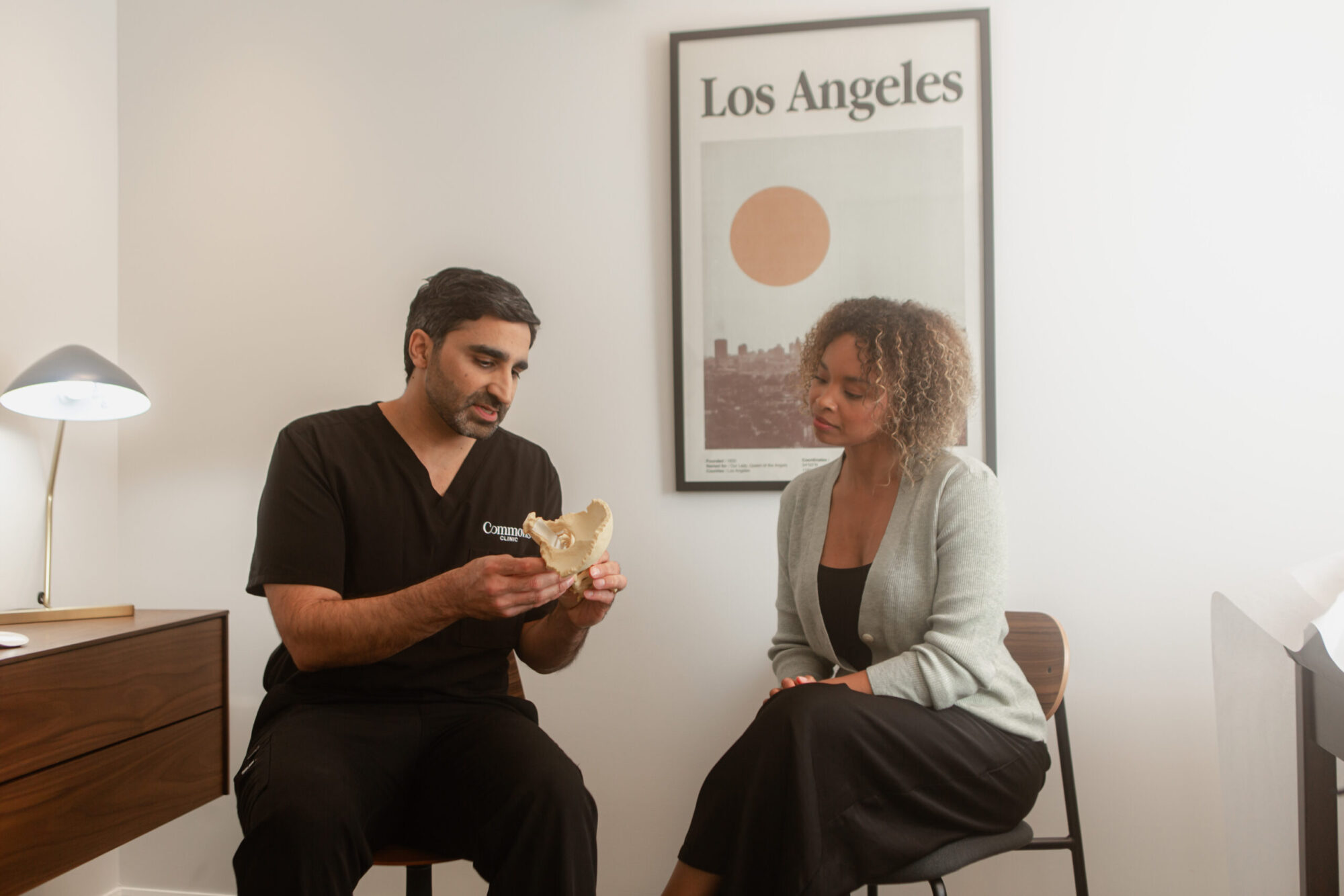
Non-Surgical Care
Evaluation, physical therapy, medication and targeted treatment first. Surgery only when it is truly the answer.
Learn more
Minimally Invasive Spinal Surgery
Small incisions, muscle-sparing tools and faster recovery for the neck and back.
Learn more
Outpatient Spinal Surgery
Spine procedures done in a day, with recovery at home the same evening.
Learn more